Theodore Case — The Man Who Made Movies Talk
Whenever you enjoy the clever dialogue of a movie, the stirring musical score, or the explosive sound of the action, you can thank Theodore Case for giving us sound-on-film. When motion pictures learned to speak, the world credited Hollywood.
But the breakthrough that made talking pictures possible did not originate on a studio lot in California. It came from a quiet research laboratory right here in Auburn, NY.
In the early 1920s, filmmakers faced a stubborn technological barrier. Audiences had been enjoying silent movies for decades, projected with remarkable clarity, but sound on film remained elusive. Early experiments were unreliable, difficult to synchronize, and nearly impossible to scale for widespread theatrical use. What the film industry needed was a reliable technology to add words and music to the picture.
That system was developed by Theodore Case, a physicist and inventor working from his home based laboratory in upstate New York.
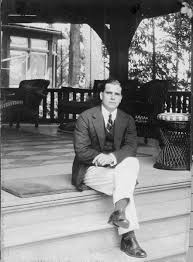
Though his name is largely unknown to the general public today, Case’s work formed the technical foundation of sound-on-film—the method that allowed dialogue, music, and effects to be recorded directly onto motion picture film itself. His inventions made it possible for early studios, most notably Fox Film Corporation, to bring talking pictures to audiences around the world.
By the end of the decade, silent films were effectively obsolete.
Movies could speak—and cinema would never be the same.
Theodore Case was not a Hollywood insider or a self-promoting entrepreneur. He was a scientist—methodical, precise, and deeply committed to experimental research. Born into a family of means, Case had the rare freedom to pursue invention without immediate commercial pressure.
Theodore Case of Auburn NY: Pioneer of Sound-on-Film
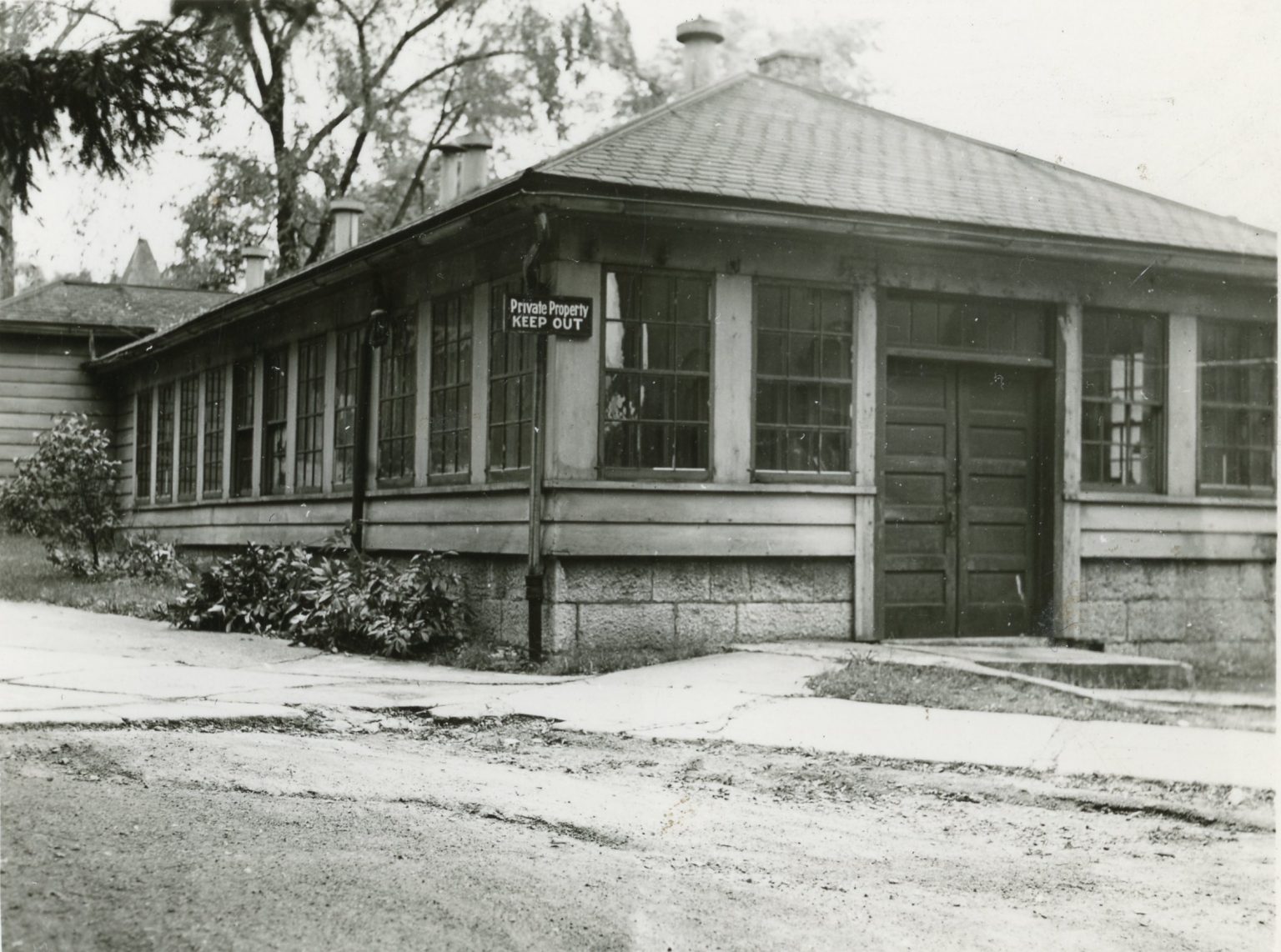
Working out of the greenhouse on the property where he resided in Auburn, (now known as Case Research Lab), he focused on applied physics and optics at a time when film technology was evolving rapidly but unevenly. While others chased headlines and patents, Case concentrated on solving practical problems: how to convert sound waves into light, how to record that light reliably onto film, and how to reproduce it clearly in a theater.
What Is Sound-on-Film? How Theodore Case Changed Movies Forever
To modern audiences, sound-on-film seems obvious. But in the 1910s and early 1920s, it was anything but.
Early “talking picture” systems often relied on separate phonograph discs that played alongside the film. These systems were fragile: if the disc skipped or drifted out of sync, the illusion collapsed. Projectionists dreaded them, and audiences noticed every flaw.
Sound-on-film solved this problem by recording audio directly onto the film strip as a visual track. When projected, the film carried its own sound in perfect synchronization.
The challenge was making this work consistently.
Case’s key contributions included:
- Reliable light modulation, converting sound waves into precise variations of light
- Advances in variable-density recording, allowing audio information to be captured clearly
- Improvements in photoelectric reproduction, ensuring sound could be played back accurately in theaters
The Partnership with Lee De Forest—and the Break
During the early 1920s, Case collaborated with inventor Lee De Forest, whose Phonofilm system is often cited in early sound-film histories. De Forest was an energetic promoter and an early pioneer, but his system struggled with reliability and commercial adoption.
Case’s technical improvements dramatically strengthened Phonofilm’s performance. However, tensions emerged over credit, patents, and public claims. De Forest continued to present the technology as his own, while Case—who preferred the laboratory to the spotlight—became increasingly uncomfortable with the arrangement.
By the mid-1920s, the partnership ended, reportedly on poor terms.
What followed would shape the future of cinema.
Fox Movietone and the Birth of the Talkies
After breaking with De Forest, Case sold his sound-on-film patents to Fox Film Corporation, which was seeking a dependable audio solution for newsreels and feature films.
Fox engineers built directly on Case’s work to create Fox Movietone, a sound-on-film system that finally delivered what the industry needed: clarity, consistency, and scalability.
Fox Movietone was used first in newsreels, allowing audiences to hear world leaders speak and events unfold with sound for the first time. Soon after, it powered early talking features. Other studios quickly followed suit, and sound-on-film became the industry standard.
By the late 1920s, the era of silent cinema had effectively ended.
And the technical foundation for that revolution traced directly back to Auburn.
Case’s Legacy in Auburn
While his national reputation faded, Case’s presence in Auburn did not. He was deeply invested in Auburn itself. Case lived, worked, and gave generously in the city, contributing to the civic and cultural life of the community. His legacy in Auburn still endures, preserved in large measure through the efforts of Cayuga Museum and Case Research Lab.
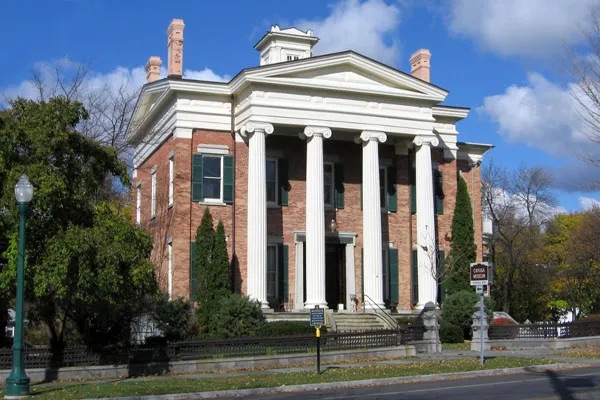
Along with the museum and research lab, the campus also features the Carriage House whose upper floor was converted by Case into a studio where some of the earliest sound films were produced! The charming building is now the site of a multi-use theatre and event venue.
For visitors to Auburn, Case’s legacy is a reminder that this small city has played an outsized role in global history—not once, but many times.
Why Theodore Case Still Matters
The story of Theodore Case and sound-on-film reminds us that world-changing innovation doesn’t always come from famous places. From his laboratory in Auburn, NY, Case developed the technology that allowed movies to speak, helping usher in the era of the talkies. His work shaped modern cinema, even if history was slow to give him credit.